

Libribianchi

Recovering volumes destined for pulping to give them a new life through a visionary operation: a project capable of transforming fragile sheets of paper into incisive, timeless sculptures was born 20 years ago from a great understanding between the couple. Since 2006.
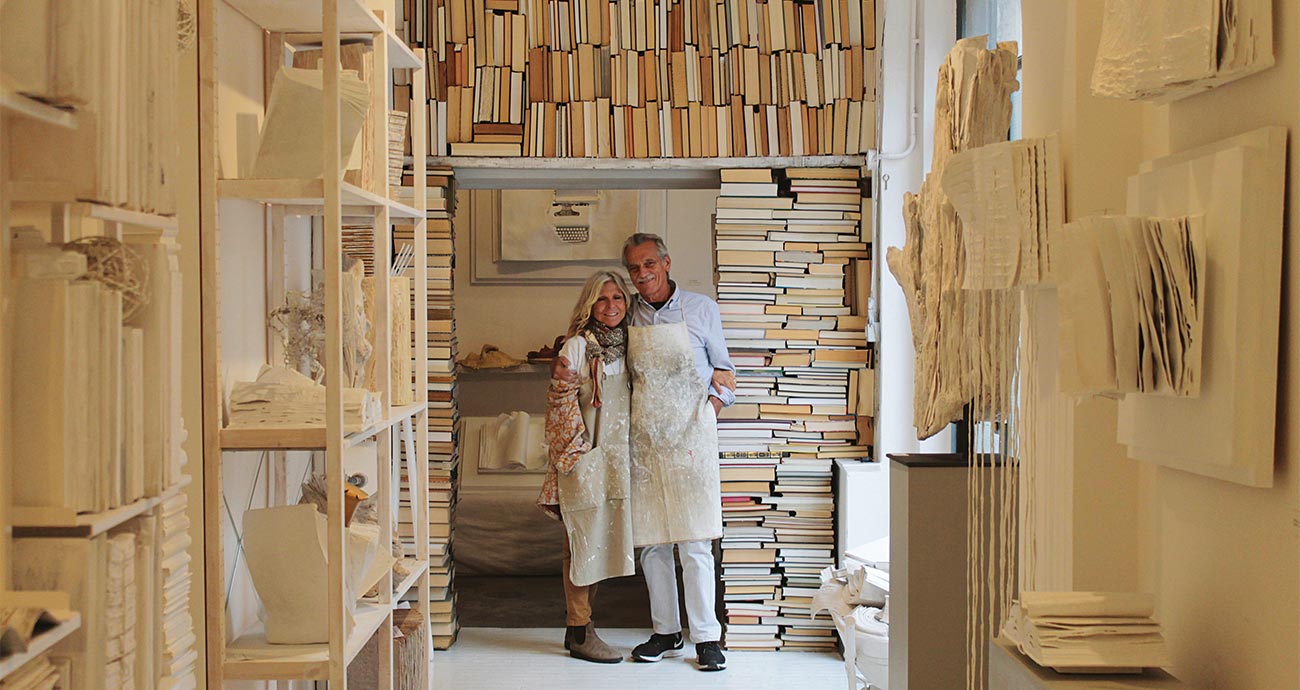
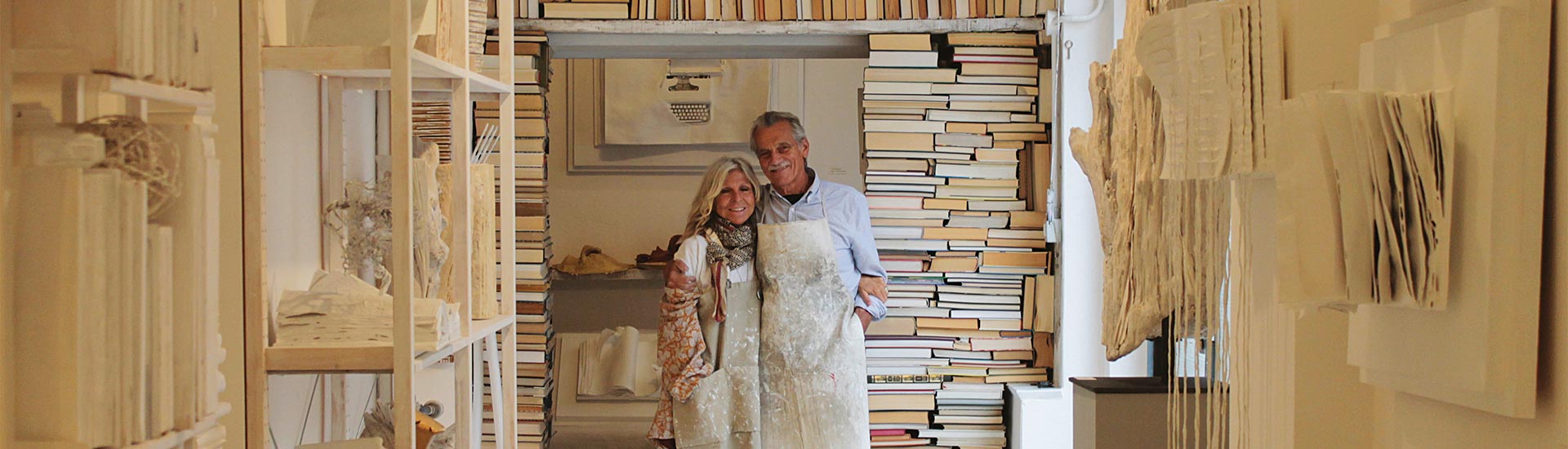
In a former print shop on a quiet street in old Milan, there is a place filled with books rescued from the scrap heap. It is Lorenzo and Simona Perrone’s Bottega artistica where there is an air of yesteryear with a reassuring white patina that pervades those who visit.
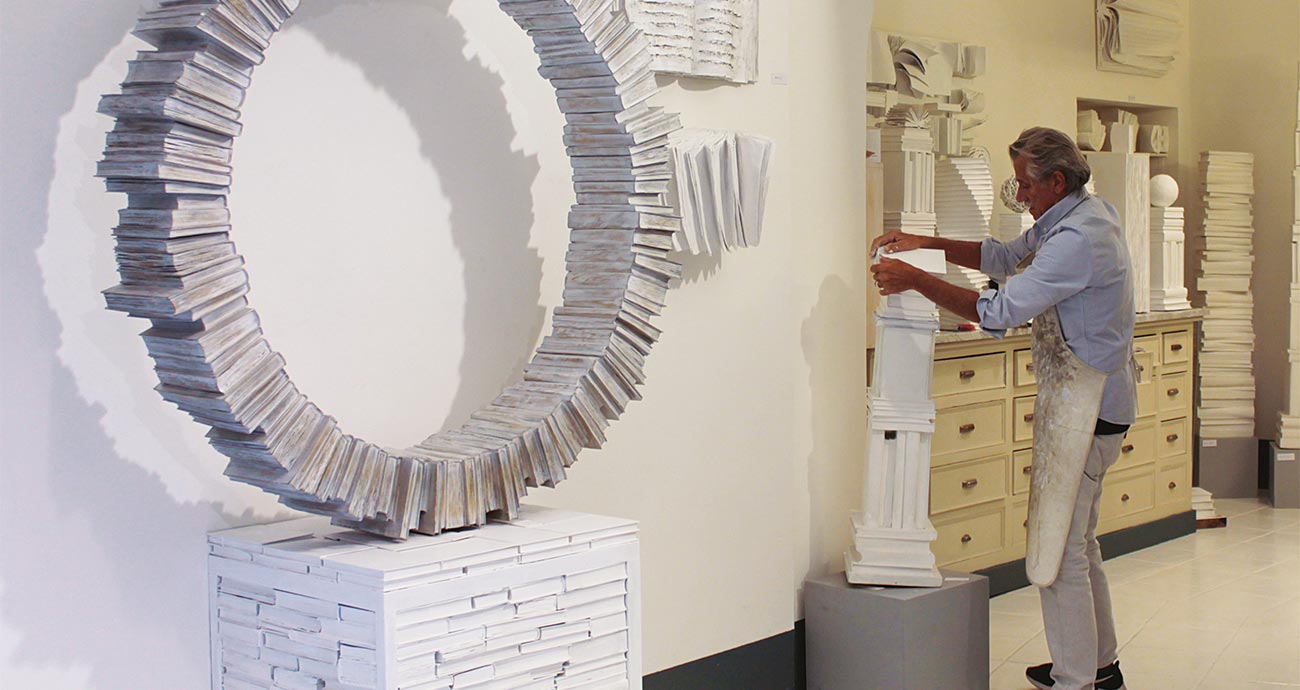
“This is where we create the LibriBianchi. They are our artistic expression, a personal quest that has been developing for more than 20 years, exploring the world of books and strongly enshrining the book/culture pair as a synonym for civilization,” Simona says. Instead, Lorenzo explains the technique, “Each book painted white becomes an icon of all books. With water, glue and chalk, we turn it into raw material on which we intervene with various seemingly unrelated materials such as barbed wire, glass, stones, wood and white paint, to try to convey with this book, our feelings in everyday life, express thoughts and send messages.” Lorenzo, a Milanese by birth, attended the Castello Sforzesco painting course as a young man and the Scuola del Libro dell’Umanitaria, which marked him forever. His professional life was born in the field of graphic design and communication between Milan, London and New York.
Simona, on the other hand, a Florentine, initially moved to Paris where she expressed herself through costume and fashion, gaining strong experience in the field of image in collaboration with important photographers.
In 2000 Lorenzo returned to his youthful artistic aspirations, leaving the shouted language of advertising for the silent language of sculpture.
Back in Italy in 2006 Lorenzo and Simona started LibriBianchi, a symbol of culture and saving study, and then expanded their production to large installations and bronze, to bring the book closer to infinite livability.
Their research evolves toward social and environmental issues with “Participatory Artivism,” always and only salvaging books destined for the scrap heap.