

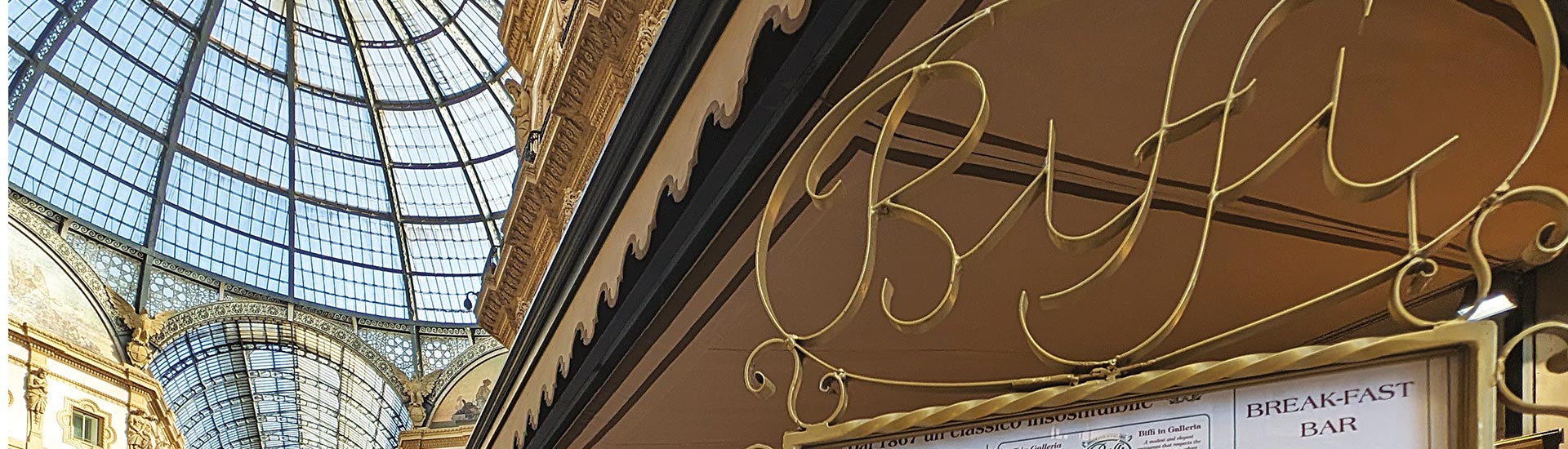
Biffi Ristorante in Galleria

Always a meeting point for those seeking hospitality and discretion, it has become over time the guardian of true Milanese cuisine. Since 1852.
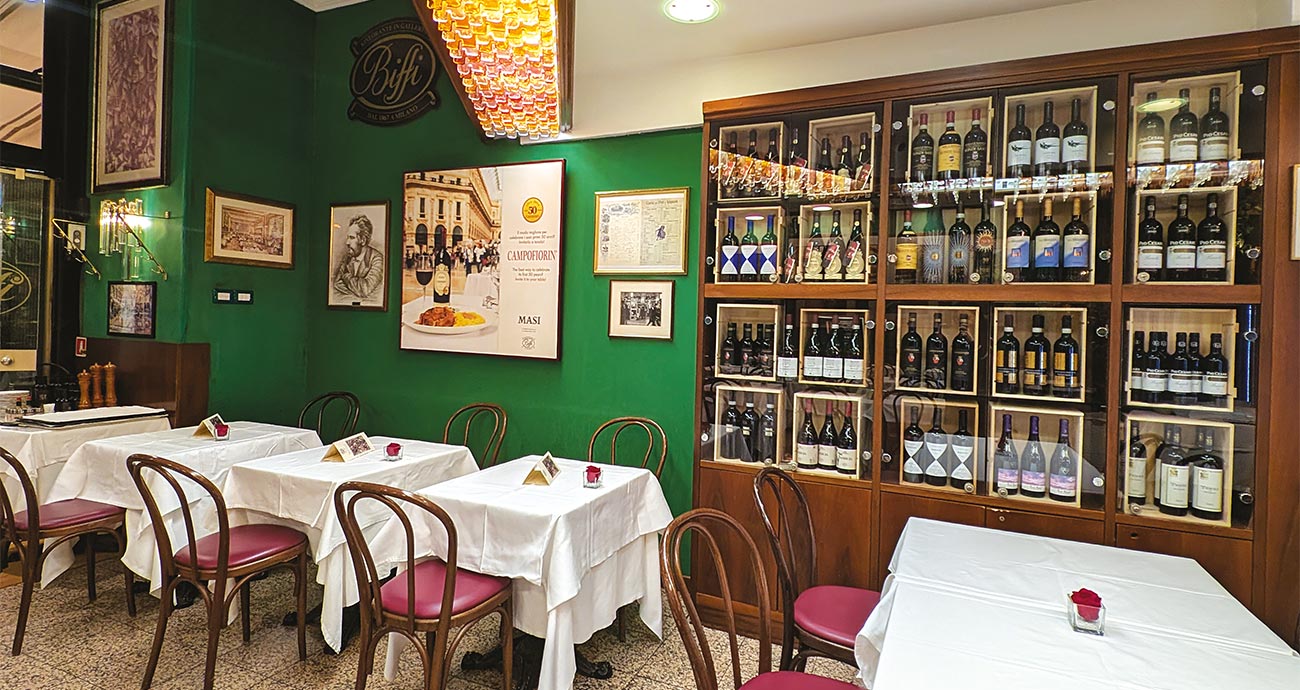
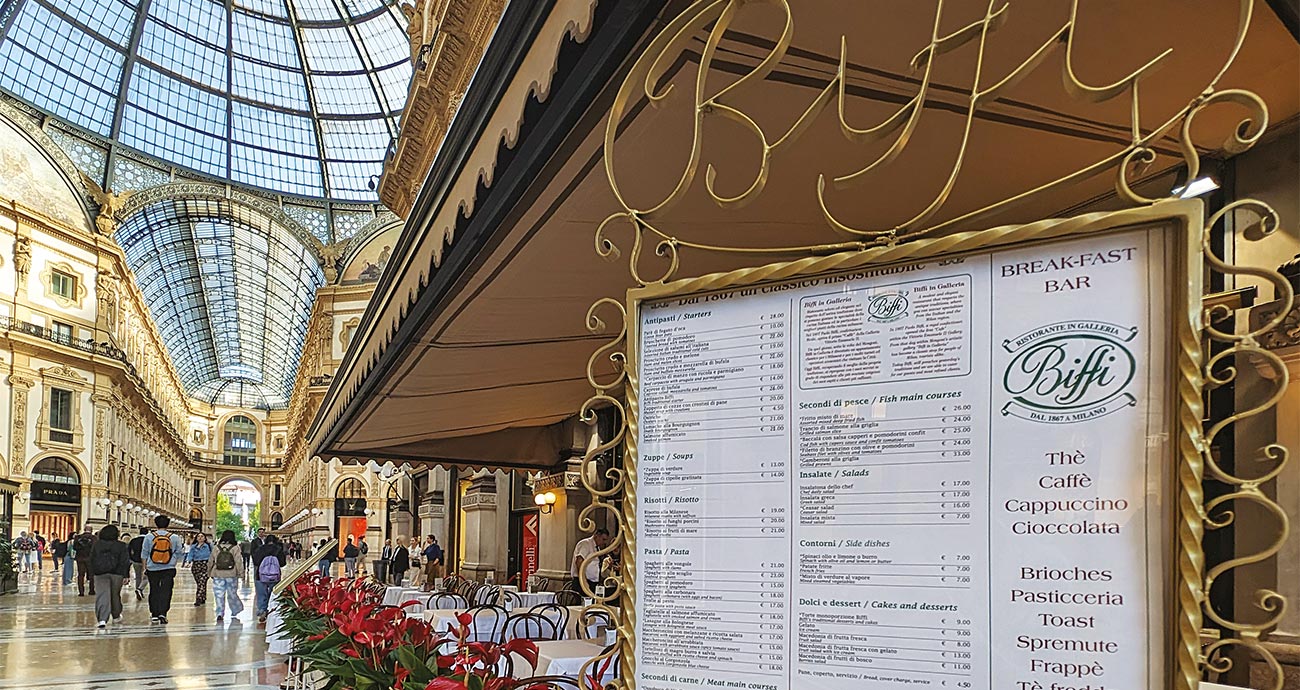
Paolo, Confectioner to His Majesty the King of Italy, opened the Café and Offelleria Biffi in the Octagon at a time when Milan was still dotted with vegetable gardens and navigable canals. It was 1852. The celebrated pastry shop, famed for its signature panettone, soon became a fixture in the homes of Milan’s refined bourgeoisie, on the tables of the Princes of Savoy, and among the city’s most prestigious families. Once construction of the Galleria – designed by Mengoni in honor of King Vittorio Emanuele II and to celebrate Lombardy’s annexation to Piedmont – was completed, Biffi moved its premises into this new, elegant structure. The inauguration took place on September 15, 1867. From that moment on, the fortunes of Biffi and those of the Galleria have shared a common destiny, through both periods of splendor and times of crisis. A meeting place for writers, musicians, and travelers, frequented by figures such as Luigi Capuana, Emilio De Marchi, and Giovanni Pozza, in 1882 Biffi became the first venue in Milan to adopt electric lighting, inspiring both amazement and curiosity. From late-19th-century literary circles to postwar sports journalists, and later to figures from the world of entertainment, Biffi has told the story of Milan as a privileged observer. Its green-hued rooms, now as then, preserve a reassuring and unmistakable retro atmosphere.
The menu, faithful to tradition, continues to offer classic local dishes such as ossobuco with saffron risotto and the iconic cotoletta alla milanese. At lunchtime it is frequented by managers, merchants, and Galleria regulars; in the evening, by an international clientele in search of authentic flavors.
Tarcisio de Bacco and Donazar Beltrame are committed to keeping Biffi’s historic tradition alive, along with the excellence of Italian cuisine, recognized as UNESCO cultural heritage.